When Wall Street Unlocks the Gate: Bitcoin Hits $70K as Schwab Moves In
The phones are buzzing across trading desks, and not just the ones parked in crypto-native Discord servers. Within the last four hours, two distinct universes collided with enough force to rattle every wallet in America. Bitcoin has clawed its way back to the $70,000 psychological threshold—a resistance level that has separated casual observers from committed believers for months. Simultaneously, Charles Schwab, the buttoned-up brokerage that built its empire on retirement accounts and blue-chip dividends, announced plans to launch direct cryptocurrency trading capabilities.
This is the moment traditional finance stopped knocking and kicked down the door.
But like any good market cycle, this breaking news comes with split personalities. While institutional giants build bridges for cautious capital, a TradingView analyst floated a scenario where XRP could skyrocket to $1,000. Meanwhile, Yahoo Finance is already peering into 2026, ranking the “7 best crypto exchanges” based on hands-on testing. This isn’t just volatility. This is cryptocurrency trading entering its messy, magnificent adolescence—caught between regulatory legitimacy and the speculative hunger that built the market.
Your Father’s Brokerage Just Went Full Crypto
Let’s talk about Charles Schwab, because this changes everything for the average person holding a 401(k) and a passing curiosity about digital assets.
For years, the mainstream investor faced a ridiculous paradox. They could call their Schwab advisor to buy shares of MicroStrategy—a company essentially functioning as a leveraged Bitcoin proxy—but couldn’t purchase actual Bitcoin through the same platform. That friction created a moat separating traditional portfolios from crypto exposure. Schwab’s announcement demolishes that moat.
What this actually means:
- No more app-hopping: Investors can now manage equities, bonds, and cryptocurrency trading from a single dashboard they’ve trusted for decades.
- Tax simplicity: Consolidated 1099 forms. No more chasing CSV files from offshore exchanges come April.
- Institutional custody: Assets held under the same regulatory umbrellas that protect traditional securities.
- Psychological validation: When a $100 billion brokerage treats crypto as a standard asset class, the “speculative toy” narrative dies a little more.
We’re witnessing the final phase of crypto’s institutional adoption. Not Coinbase going public. Not Bitcoin ETFs. This is the infrastructure of American retail finance digesting digital assets whole. For the 34 million Schwab customers suddenly gaining direct access, cryptocurrency trading just shifted from “tech bro hobby” to “portfolio allocation.”
$70,000: The Line in the Sand
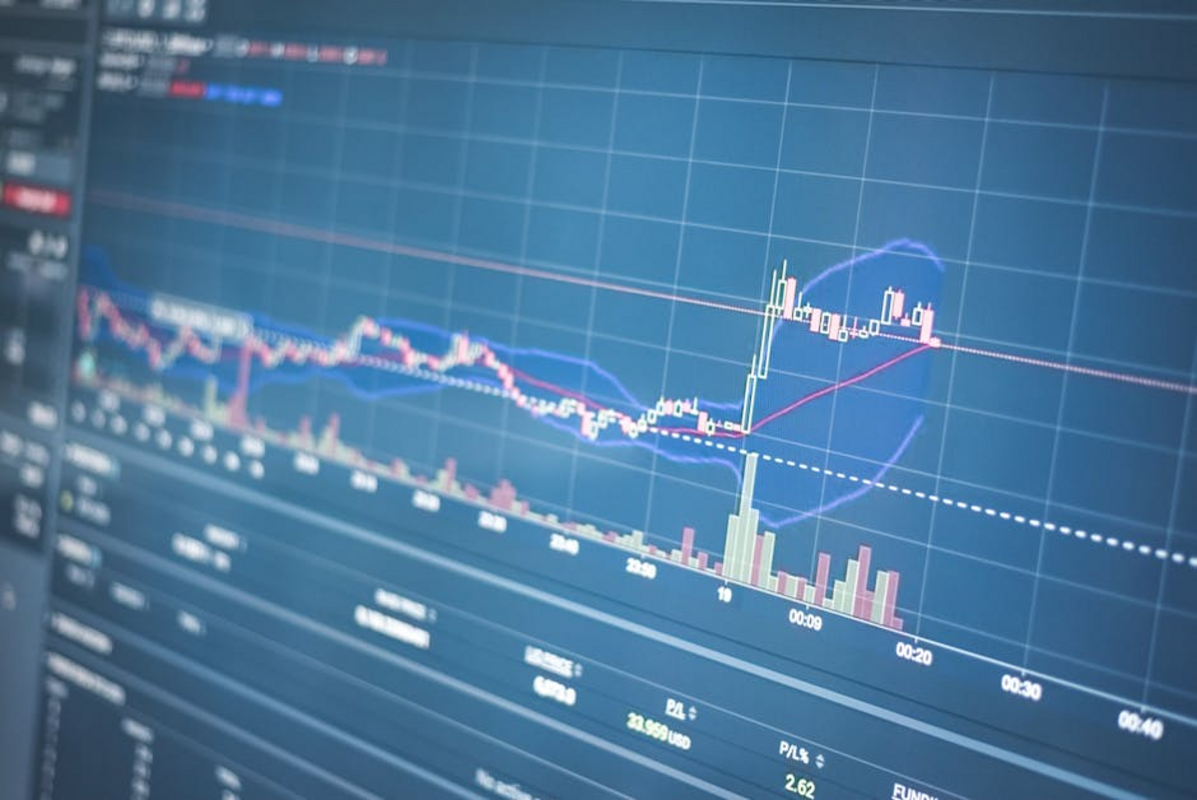
Bitcoin doesn’t care about your feelings, but it respects round numbers. The push toward $70,000 represents more than price appreciation—it’s a technical siege on the fortress separating the current market from euphoric territory.
According to recent market data, BTC has rebounded to approximately this psychological level, testing resistance that has rejected multiple advances over recent sessions. Traders watching the charts understand what’s at stake. A decisive break above $70,000 with volume confirmation opens the floodgates to previous all-time highs. Failure here traps leverage in a descending range that punishes the overeager.
The timing isn’t coincidental. Schwab’s news broke as Bitcoin approached this threshold, creating a feedback loop of optimism. Institutional adoption stories provide the narrative fuel for technical breakouts. When your boring brokerage account suddenly offers Bitcoin exposure while the price hovers at major resistance, retail FOMO transforms into calculated allocation.
This isn’t 2021’s meme-driven mania. This is infrastructure meeting price discovery.
From TradingView to Time Travel: The Other Side of the News Cycle
While Schwab builds bridges to the future, other corners of the market remain deliciously, dangerously speculative. The same four-hour news cycle that brought us institutional gravitas also delivered a TradingView analysis suggesting XRP could trade at $1,000 under specific conditions. That’s roughly a 1,500x return from current levels, for those keeping score at home.
Simultaneously, Yahoo Finance published forward-looking coverage ranking the “7 best crypto exchanges in 2026” based on hands-on testing. Think about that timeline. We’re analyzing trading infrastructure three years out while simultaneously pricing assets on hypothetical scenarios involving regulatory shifts and liquidity explosions that may never materialize.
This duality defines current cryptocurrency trading trends. The market has schismed into two operating modes:
- The Institutional Now: Regulated products, brokerage integration, tax-efficient vehicles, and compliance-first infrastructure.
- The Speculative Forever: Four-digit price targets, multi-year exchange forecasts, and scenario-based valuation models that require perfect storms of adoption and regulatory clarity.
Both narratives are trending simultaneously because both serve different masters. Schwab captures the retiree reallocating 5% into Bitcoin. The $1,000 XRP prediction captures the trader swinging for life-changing returns on a Tuesday afternoon. Neither audience is wrong. They’re just playing different games on the same field.
On One Hand, Stability. On the Other, $1,000 XRP.
The tension in these updates reveals where we actually stand in crypto’s maturation arc. Let’s strip away the hype and examine the reality facing anyone refreshing their portfolio this week.
On one hand: Charles Schwab entering direct cryptocurrency trading represents the death of crypto’s Wild West phase. When major U.S. brokerage firms integrate digital assets, they bring compliance departments, risk management protocols, and fiduciary standards. This stability attracts pension funds, endowments, and risk-averse wealth that previously couldn’t justify the operational headache of self-custody or offshore exchange accounts.
The implications extend beyond Bitcoin. Schwab’s infrastructure will likely support Ethereum and eventually other large-cap assets, creating natural demand floors that smooth volatility. For the average American investor, this updates their available toolkit without requiring them to learn seed phrases or distinguish between hot and cold wallets.
On the other hand: The XRP $1,000 prediction and the Yahoo Finance 2026 exchange rankings remind us that cryptocurrency trading remains fundamentally speculative. Despite institutional adoption, the asset class still trades on narrative momentum, regulatory rumors, and technical analysis that would make a forex trader blush.
The $1,000 target isn’t necessarily wrong—it’s just contingent on XRP capturing massive market share in global cross-border payments while simultaneously seeing token burns or supply shocks that mathematically require trillions in market capitalization. Possible? Sure. Probable? That’s where the casino aspect remains.
This bifurcation creates a strategic dilemma. Do you allocate through Schwab for the boring, tax-efficient, dollar-cost-averaged accumulation of the next decade? Or do you chase asymmetric returns on TradingView moonshots that could realistically go to zero?
The uncomfortable answer is that these approaches aren’t mutually exclusive, but they require different risk management. The Schwab investor sleeps soundly. The XRP maximalist checks prices at 3 AM. Know which table you’re sitting at before the dealer starts flipping cards.
Your Wallet’s Next Move
Stop refreshing. Start positioning.
The convergence of Bitcoin testing $70,000 resistance while Charles Schwab opens the floodgates creates a rare moment of clarity in an often chaotic market. If you’re holding cash on the sidelines waiting for “the right time,” infrastructure just removed your last excuse. When traditional brokerages embrace direct cryptocurrency trading, liquidity deepens, spreads tighten, and the “it’s too complicated” objection evaporates.
But here’s the actionable takeaway: Use Schwab for the foundation, not the speculation.
If you’ve been waiting for a regulated entry point, this is it. Open that position you’ve been delaying. Not because Bitcoin is definitely breaking $70,000 today (it might reject and retest $65,000), but because the infrastructure now supports long-term holding without operational friction. Set your recurring buy. Ignore the noise.
Meanwhile, treat the XRP predictions and 2026 exchange rankings as what they are—entertainment with lottery ticket potential. If you must chase asymmetric upside, allocate accordingly: 90% boring institutional infrastructure, 10% moonshot speculation. Never invert that ratio unless you’re genuinely prepared to lose sleep and capital.
The breaking news cycle will shift in four hours. Bitcoin might dip on a regulatory tweet. Schwab might delay their launch timeline. Another analyst might predict $50,000 or $500,000. The only constant is that cryptocurrency trading has graduated from basement experiments to boardroom strategy sessions.
The future isn’t coming. It just opened a brokerage account.
What Investors Are Actually Asking
Can I really buy Bitcoin directly through Charles Schwab now?
As of these latest updates, Schwab has announced plans to launch direct cryptocurrency trading capabilities, but rollout timing varies by account type. Keep an eye on your Schwab notifications or contact your advisor. The key distinction is “direct”—meaning actual asset ownership rather than futures products or proxy stocks.
Should I wait for Bitcoin to break $70,000 before buying, or is this a local top?
Technical traders watch $70,000 as resistance, but trying to time exact entries often costs more than dollar-cost averaging. The Schwab news suggests long-term infrastructure support, which matters more than whether you buy at $69,000 or $72,000 if you’re holding for years. Breakouts can be explosive, but so can rejections. Position size according to your tolerance, not the chart’s exact level.
Are XRP’s $1,000 predictions realistic, or should I ignore TradingView speculation?
Mathematically, XRP at $1,000 would require market capitalization exceeding global GDP—possible only under extreme scenarios involving hyperinflation of fiat currencies or XRP becoming the sole settlement layer for all international banking. Treat these predictions as theoretical exercises rather than base cases. They emphasize what’s “possible” under perfect conditions, not what’s “probable” under normal market dynamics.