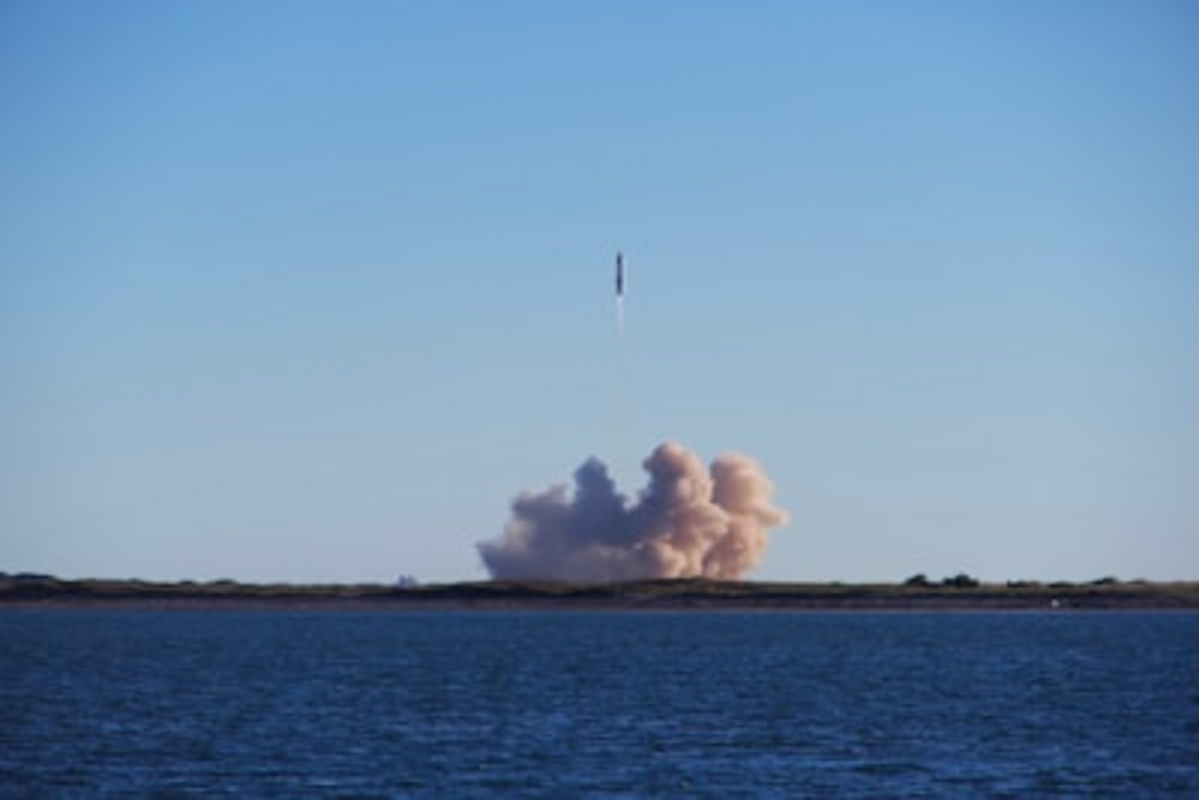
SpaceX Just Filed the Confidential IPO That Could Break Every Record on Wall Street
Elon Musk doesn’t do subtle. While most companies drum up hype with months of roadshows and orchestrated media leaks, SpaceX chose the financial equivalent of a midnight raid—confidentially filing IPO paperwork with regulators within the last four hours, catching even seasoned traders off guard as they sipped their first coffee. This isn’t just another unicorn awkwardly stumbling toward public markets. We’re potentially staring down the barrel of the largest market debut in history, a record-breaking offering that would finally let retail investors buy into the space exploration monopoly that’s stayed stubbornly private for over two decades.
The mechanics here matter. SpaceX utilized the JOBS Act provision allowing emerging growth companies to submit initial public offering drafts confidentially, testing the waters without immediate public scrutiny of their financials. It’s a maneuver that screams institutional confidence—or quiet desperation, depending on which trading desk you ask. For years, Musk has insisted SpaceX didn’t need the public market circus. The company has raised billions in private capital at ever-increasing valuations, systematically crushing legacy aerospace competitors like Boeing and Lockheed Martin’s joint ventures while building the Starlink satellite constellation that now dominates low-Earth orbit.
So why now? Why confidentially file in the pre-market hours alongside ADP employment data and Nike earnings warnings?
Perhaps the private market spigot is finally running dry. Venture capital and sovereign wealth funds—SpaceX’s traditional lifeblood—have pulled back dramatically over eighteen months of high interest rates. Or perhaps Musk sees the window closing: rates hovering at restrictive levels, tech valuations compressing, and a retail investor base hungry for the next Tesla-like rocket ship before the 2024 election uncertainty hits. Either way, CNBC’s breaking news alert sent immediate shockwaves through futures trading, with analysts already speculating about valuation figures that would dwarf any previous aerospace or telecom IPO.
The implications ripple beyond Musk’s empire. A public SpaceX fundamentally alters the space industry. Competitors must now answer to public market scrutiny while SpaceX answers only to Musk—yet with access to unlimited retail capital. It’s a heads-I-win-tails-you-lose proposition that could cement the company’s monopoly on American space launches for a generation.
The 62,000-Person Reality Check Hiding in Plain Sight
While SpaceX captures the glory, the ADP National Employment Report dropped a quieter bombshell that deserves equal attention. Private sector hiring totaled exactly 62,000 jobs in March. On its face, that number sounds anemic—the broader economy typically needs 150,000 new positions monthly just to keep pace with population growth and labor force expansion. Yet economists had expected worse. Much worse.
This “better than expected” narrative has become a dangerous addiction on Wall Street. We’ve conditioned ourselves to celebrate mediocrity, to cheer when the patient merely stabilizes rather than recovers. The 62,000 figure represents a labor market cooling from its post-pandemic boil, yes, but not the collapse that recession bears have been predicting since 2022. For Federal Reserve watchers glued to CNBC’s trending updates, this creates a policy paradox.
Jay Powell’s dilemma crystallizes here. Cut rates to support a slowing economy, validating the soft-landing narrative? Or hold steady while SpaceX and its technology brethren suck all available liquidity out of the room for moonshot projects? The ADP data serves as the critical precursor to Friday’s official Bureau of Labor Statistics jobs report. If the federal government confirms this trend, the Fed faces undeniable evidence that employment growth is decelerating toward stall speed.
Yet here’s what the headline numbers obscure: quality versus quantity. Those 62,000 jobs weren’t distributed evenly. Leisure and hospitality—traditional bellwethers of consumer confidence—showed weakness. Manufacturing remained stagnant. The gains concentrated in sectors that benefit from infrastructure spending and artificial intelligence build-outs, creating a bifurcated economy where rocket scientists find funding while restaurant workers face hour cuts.
Nike’s Recovery Trajectory Exposes the Cracks in Consumer Armor
Meanwhile, CNBC’s Morning Squawk segment cut through the IPO euphoria and employment data with a sobering reality check that too many bulls want to ignore. Nike—the sneaker giant that once seemed recession-proof, the company that defined American consumer culture for three decades—continues to struggle with fundamental questions about its recovery trajectory. This isn’t just about athletic footwear inventory or China sales exposure. When Nike sneezes, the entire consumer discretionary ecosystem catches a violent cold.
The juxtaposition feels almost poetic in its cruelty. On one screen, humanity’s leap toward multi-planetary civilization prepares for public investment. On another, a company that sells rubber and fabric to human feet on Earth cannot figure out its direct-to-consumer channels or inventory management. The stock market rebound we’ve witnessed over recent sessions isn’t broad-based economic strength; it’s concentrated hope in moonshots while terrestrial retail rots from the inside out.
Nike’s problems run deeper than cyclical headwinds. The brand lost cultural cachet to boutique competitors and direct-to-consumer challengers. Its wholesale partners—Foot Locker, Dick’s Sporting Goods—face their own existential crises. And the Chinese consumer, once Nike’s growth engine, has pulled back amid property sector concerns and geopolitical tensions.
If SpaceX represents the future we want to believe in, Nike represents the present we’re actually living—one where paychecks stretch thin, where 62,000 new jobs barely cover population growth, and where premium athletic wear becomes a discretionary cut rather than a status symbol.
What Nobody’s Talking About: The “Project Hail Mary” Synchronization
Buried in the Morning Squawk coverage, easily missed amid the SpaceX IPO frenzy and ADP data drop, sat a curious reference: “Project Hail Mary.” Most traders scrolled past it, assuming it was corporate codeword for some restructuring initiative or perhaps the upcoming Andy Weir film adaptation starring Ryan Gosling. They’re missing the metastory.
In Weir’s novel, a lone astronaut must solve an impossible scientific problem to save Earth, armed with nothing but ingenuity, desperation, and a rapidly depleting time horizon. Sound eerily familiar?
That’s exactly the position Federal Reserve officials occupy right now—attempting the impossible soft landing while inflation hovers above target and employment growth decelerates toward that critical 62,000-job threshold. It’s precisely what SpaceX is attempting—making space travel commercially viable before the private capital runway expires. It’s what Nike is failing to do—engineer a turnaround in a consumer landscape that shifted permanently during the pandemic.
The mention of “Project Hail Mary” in financial media this morning isn’t accidental clickbait. It signals a market psychology rooted in last chances, of desperate Hail Mary passes thrown by portfolio managers who’ve gone all-in on technology while ignoring the labor market reality. We’re watching institutional investors bet on science fiction narratives while 62,000 jobs whisper that the future might be more mundane, more constrained, more earthbound than Musk promises.
This synchronization of references reveals the anxiety beneath the bullish headlines. When financial journalists start referencing survival fiction in the same breath as breaking market updates, the subtext becomes text: we’re in survival mode, hoping for miracles because the fundamentals no longer justify the valuations.
The Bear Case: This Is Exactly How Bubbles Stampede Toward Collapse
Fair warning: Everything I’ve written could be catastrophically wrong, viewed through the wrong end of history’s telescope.
Every market cycle produces its “record-breaking” IPO that historians later identify as the absolute top. Remember 2021’s SPAC boom? The WeWork debacle? The Pets.com sock puppet? SpaceX choosing this particular moment—confidentially filing after staying private through the zero-interest-rate bonanza of 2020-2021 when money was literally free—suggests Musk sees the writing on the wall more clearly than the bulls.
Private markets are freezing. Sovereign wealth funds from Saudi Arabia to Singapore are pulling back from technology bets. The smart money wants liquidity, and they want it now, while retail sentiment still believes in Mars colonies and electric rocket ships. A public SpaceX isn’t a gift to small investors; it’s the largest private liquidity event in history, allowing insiders to exit while retail crowds in.
Furthermore, that ADP number of 62,000 jobs isn’t “better than expected” by any historical standard—it’s a flashing red warning light. When job growth drops consistently below population growth, recession follows with mathematical certainty. The unemployment rate hasn’t spiked yet because labor force participation remains depressed, but the leading indicators are screaming. Nike’s struggles aren’t temporary headwinds or inventory mismatches; they’re structural evidence that the American consumer—the engine that drives 70% of GDP—is broken.
If SpaceX opens at a valuation north of $150 billion (don’t be shocked if it does), that could be the moment future financial historians point to—the peak of the everything bubble, when we collectively decided to buy Martian dreams while ignoring earthly fundamentals. The stock market rebound might simply be the deadest of dead cat bounces, a final gasp before the reality of those 62,000 jobs sinks into the collective consciousness.
Welcome to the Casino—Place Your Bets Carefully
Whether SpaceX becomes the defining investment of the decade or the final shovel of dirt on this bull market’s grave, one truth emerged crystal clear from CNBC’s four-hour news window: the rules have fundamentally changed. We witnessed a collision of realities—space age optimism meeting labor market stagnation, private market exclusivity meeting public retail desperation, “Project Hail Mary” survival narratives meeting “better than expected” complacency.
We’re no longer trading companies based on discounted cash flows. We’re buying narratives, futures, and collective delusions. SpaceX isn’t just a rocket manufacturer; it’s a leveraged bet on human destiny itself. Those 62,000 ADP jobs aren’t just statistics; they’re the gravitational tether keeping us grounded while Musk tries to cut the cord entirely.
The market will digest these updates over coming sessions. Analysts will rush to upgrade SpaceX before it even prices a share. The Fed will parse the employment data and likely maintain their hawkish stance, terrified of fueling another bubble. Nike will announce another “strategic pivot” to direct-to-consumer that shareholders stopped believing two years ago.
And somewhere, a retail trader will mortgage their home to buy IPO shares in a company that loses billions annually shooting metal into orbit, because that’s what we do now. We swing for the fences when we should be bunting. We celebrate 62,000 jobs when we should demand 200,000. We call confidential filings “transparency” and act surprised when gravity eventually wins.
The rockets are leaving. The question isn’t whether you’ll get onboard—it’s whether there’s still enough fuel for the return trip.